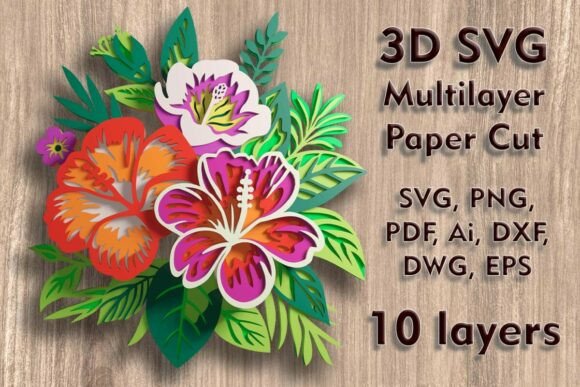
A Designer's Take on the Hibiscus 3D SVG Multilayer Paper Cut File
From the moment you open this hibiscus embroidery file, its personality is clear. It’s not a timid, delicate floral. It’s a confident, bold composition with layered petals that immediately suggest dimension. The mood is vibrant and tropical, leaning into a relaxed, summery aesthetic. For an embroidery designer, this shape and layout scream for a project where the design can be a star, not just an accent.
Where This Hibiscus Design Finds Its Home
In my studio, I think about where a design will truly shine. This hibiscus, with its generous size and layered elements, naturally belongs on statement pieces. Picture it centered on a crisp linen tote bag for a boutique—it becomes the product’s entire identity. On a heavyweight cotton sweatshirt, it delivers that handcrafted, artisanal feel customers seek. It would be a stunning focal point on a decorative pillow cover or a kitchen towel set destined as a wedding gift. For a baby item, perhaps a special blanket, it brings a cheerful, sunny energy without being overly fussy.
I recently used a similar floral for a client’s custom apron, and the reaction was telling. The bold, clean shapes translated into embroidery that looked crisp and professional, not cluttered. That’s the vibe here. This hibiscus embroidery design feels like it would elevate a simple product into a handmade gift people are proud to give.
Performance in Real-World Embroidery Projects
Moving from screen to stitch is the real test. For custom apparel like t-shirts, the size is a consideration. At its provided dimensions, it’s substantial. On a standard adult tee, it would be a large, chest-centered motif—perfect for a statement piece but perhaps overwhelming for a subtler look. On a tote bag or pillow, that scale is ideal. The layered petal structure suggests areas for beautiful satin stitch or fill stitch work, creating rich texture.
For Etsy sellers and small shop owners, this kind of design is a solid commercial embroidery asset. It produces a finished product that looks valuable. It’s recognizable, giftable, and has a clear thematic appeal (Floral Compositions are perennial favorites). In a craft fair setting, an embroidered sweatshirt featuring this hibiscus would catch the eye from a distance. Its clarity translates well into digital product previews and printable mockups for online listings, which is crucial for selling the idea before the stitch.
Caution Zones: Where to Proceed with Care
Every design has its limits, and a practical reviewer has to note them. The description wisely advises caution when reducing the size due to thin elements. This is key. Attempting to shrink this for a cap or a small baby bib could cause those finer details to merge or become too dense for clean stitching. On stretchy fabrics like thinner tees, careful stabilizer choice is paramount to maintain the shape integrity.
Dark fabric backgrounds require thoughtful thread color planning to ensure the hibiscus’s vibrancy isn’t lost. Also, while the 3D SVG structure implies lovely depth, on highly textured fabrics (like some boucle or heavy linens), the intricate layers might not read as clearly. For products destined for frequent washing, such as kitchen towels, a robust stitch density in the fill areas will help longevity. This isn’t a design I’d casually place on a curved, structured cap surface without thorough testing—its large, flat layout is best suited for relatively flat applications.
How This File Impacts Your Craft Business
Using a design like this isn’t just about making one item; it’s about building a consistent brand. For creative entrepreneurs, a well-executed, bold floral on your products signals a commitment to quality. It boosts customer trust because the result looks professional. The visual appeal is immediate, which drives buyer engagement in a crowded marketplace. For personalized gifts, it offers a strong base—adding a name or date beneath such a graphic feels special.
As a digital product seller, offering a finished item made with this hibiscus design alongside the file itself can showcase its potential. It demonstrates your understanding of the finished product, which resonates with fellow makers.
Essential Designer Notes Before You Hoop It Up
My routine with any new embroidery file, including this Hibiscus 3D SVG Multilayer Paper Cut File, is methodical. Always test on scrap fabric first, preferably a similar weight and type to your final project. Check thread color contrast against your background fabric—do a simple black and white mockup on screen to evaluate value contrast. Review the stitch density in your machine embroidery software; ensure it feels appropriate for your fabric.
Confirm your hoop size can accommodate the design comfortably at your chosen scale. Inspect the small details in the layered areas: will they translate clearly, or might they need slight adjustment for your specific machine or technique? Use proper stabilizer; a design with this much potential detail deserves a solid foundation. Crucially, before selling finished items or digital products derived from it, confirm the licensing terms. Understand the permissions for personal and commercial use to operate your craft business with confidence.
Ultimately, this hibiscus design is a strong asset. It brings a vibrant, confident personality to projects that need a central, beautiful focus. It feels tailored for makers who want to create items that don’t just whisper, but speak clearly about the care and skill put into them.