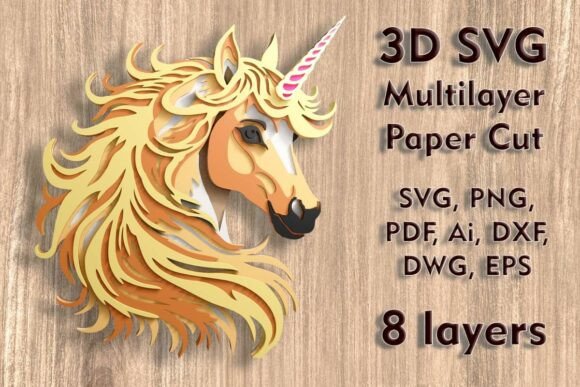
A Designer's Review of the Unicorn 3D SVG Multilayer PaperСut Files
Before I put anything on fabric for a client or my own shop, I treat an embroidery design like a blueprint. It’s not just a pretty picture; it’s a plan for a physical object that needs to stitch out cleanly, look professional, and ultimately, delight a customer. That’s the lens I’m using to look at this Unicorn 3D SVG Multilayer PaperСut Files. My first impression? It’s whimsical, but structured. The layered approach suggests depth, which translates beautifully into embroidery, creating a sense of dimension without relying solely on heavy fill stitches.
The Mood It Creates & Where It Belongs
This unicorn design isn’t just fantasy; it’s gentle fantasy. The layered elements—likely meant for paper cutting’s stacked layers—give it a soft, almost storybook feel when imagined as embroidery. That visual personality makes it a natural fit for projects where warmth and charm are key. I immediately thought of nursery decor, personalized baby blankets, or a special pillow cover for a child’s room. It also carries a strong giftability factor for birthdays or holidays. For a small business, this isn’t a generic logo; it’s a narrative piece that can turn a simple tote bag or apron into a cherished item.
Performance in Real-Life Embroidery Situations
Let’s walk through a real scenario. Imagine a client orders a custom embroidered sweatshirt for her niece, requesting something “magical and unique.” I’d consider this design. The specified size, 250 x 225 mm (roughly 10 x 9 inches), is substantial. On a sweatshirt, that becomes a bold, central feature, not a tiny accent. Because the size can be easily increased, scaling it up for a larger blanket or pillow cover is straightforward. The caution about reducing the design, however, is crucial for embroidery. Thin elements in an SVG can become problematic at small hoop sizes; a delicate unicorn horn or mane detail might get lost or stitch out poorly on a cap or a small baby item patch.
For apparel like t-shirts or tote bags, this design would work best as a statement piece. Its layered nature could be interpreted through machine embroidery using different stitch types—perhaps satin stitch for bold outlines and fill stitch for the larger body areas. On a tea towel or apron, it would lean more toward decorative, boutique-style kitchenware. The Fantasy And Fairy Tales category tells you exactly what market you’re tapping into: customers looking for enchantment, not minimalism.
Where This Design Demands Extra Care
The review advice to be careful when reducing is a designer’s red flag. If you’re thinking of a small embroidered patch for a hat, or stitching it onto a curved cap surface, you must test extensively. Those thin elements could become a blur of dense stitches or break up. Similarly, on textured or stretchy fabrics, the clarity of those layered details could suffer without the right stabilizer. Dark fabric backgrounds also require careful thread color planning to maintain the design’s ethereal, light mood.
For products needing frequent washing, like baby clothes or kitchen towels, consider simplifying the most intricate parts if possible. Dense stitch areas in small sections might wear differently. This isn’t a flaw of the design, but a practical consideration for any complex embroidery file when applied to functional items.
Impact on Your Business & Craft
Using a design like this well elevates your work. Its inherent detail and 3D SVG structure, when stitched cleanly, boost visual appeal and stitching clarity. That directly increases perceived product value. A customer seeing this on a handmade product recognizes the effort and artistry, building trust and engagement. For an Etsy seller or craft fair vendor, it offers a distinctive product that stands out from simpler, single-layer motifs. It supports brand consistency if your shop specializes in detailed, narrative designs.
For commercial embroidery or digital product sellers offering the files themselves, it’s a strong design asset. The multilayer foundation gives other makers flexibility, which they appreciate. A printable mockup for a shadow box, as mentioned in the description, hints at its versatility beyond fabric, but in the embroidery world, that layered thinking inspires creative stitch interpretation.
Practical Notes Before You Hoop the Fabric
My standard practice applies strongly here. Always test this design on scrap fabric first. Match the fabric and stabilizer to your final product—a sweatshirt fleece behaves very differently from a cotton pillow cover. Check thread color contrast meticulously, especially if moving from the implied light palette of a unicorn to a darker background. Review the stitch density in your embroidery software; those thin areas might need adjustment to prevent puckering.
Confirm your hoop size can handle the design at your desired scale. Inspect the small details in a test run: are the horn, eyelashes, or mane layers stitching distinctly? It’s wise to test the design in a black and white mockup in your software to see pure form, and compare how it looks on both light and dark fabric backgrounds digitally before you stitch.
Finally, a crucial step for any maker: confirm the licensing terms for this Unicorn 3D SVG Multilayer PaperСut Files before selling finished items or using it in commercial embroidery projects. The product type is listed, but the specific usage rights are not detailed here. That check is non-negotiable for professional use.
In summary, this design is a lovely, detailed tool. It invites creativity and fits a clear market niche. Its success on an embroidered tote bag, baby item, or holiday gift hinges on respecting its complexity—playing to its strengths at a larger scale and handling its delicate parts with care. For the crafter or entrepreneur who works thoughtfully, it can become a signature piece that captures both magic and craftsmanship.